

AI is already here
AI isn’t a distant trend affiliates need to prepare for. It’s already reshaping how content on the internet is planned, written, and optimized across the web. Affiliates are discovering that AI tools for affiliate marketing can make the entire process of creating and refining content faster and more efficient.
But AI tools like ChatGPT and Claude are not shortcuts to instant commissions. The real advantage comes from knowing where they fit into your affiliate marketing strategy and how to use them without losing your voice. When paired with human insight, you can improve efficiency, strengthen content quality, and ultimately improve affiliate conversions with AI.
If you’ve been curious about how to use AI tools in your affiliate marketing efforts but want practical guidance, this post will walk you through exactly where it fits and how to make it work for you.
Key takeaways
Here’s what you’ll learn about using AI tools for affiliate marketing:
- AI isn’t the future. AI is the present, and it’s already helping affiliates save time and work smarter.
- AI content tools like ChatGPT and Claude can generate ideas, refine copy, and support SEO without replacing your voice.
- Human insight is still essential for authenticity, trust, and strategy.
- Using AI thoughtfully can help you scale content, improve conversions, and reach more readers.
- Start small, experiment, and integrate AI gradually for the best results.
Where does AI fit in your affiliate workflow?
AI works best as an assistant, not a replacement for strategy or creativity. It can handle repetitive or research-heavy tasks so you can focus on strategy and audience relationships.
Here’s where AI typically adds the most value:
- Generating blog topic ideas and content outlines
- Summarizing research or product details
- Identifying keyword themes and search intent
- Suggesting alternative headlines and calls to action
What it can’t replace is your lived experience, product knowledge, and understanding of your audience. Those are what build trust and drive long-term affiliate revenue.
Using AI for content ideas and planning
One of the easiest and most effective ways to use AI tools for affiliate marketing is during the content planning stage. Instead of starting with a blank page, use tools like ChatGPT or Claude to brainstorm blog topics, generate new angles for product reviews, or outline comparison posts that align with search intent. This can dramatically reduce the time it takes to move from idea to draft.
AI is also helpful for uncovering and expanding on what’s already working for you. If you have a high-performing article, you can use AI to identify related long-tail keyword opportunities, suggest supporting post topics, or surface frequently asked questions specifically for your audience’s needs that deserve their own section. It can even help you refresh outdated content by recommending updated talking points or new subtopics your audience may be searching for now. If you’re publishing affiliate content on WordPress.com, tools like the Jetpack AI Assistant can help you refine drafts and adjust tone directly within the editor, saving you from switching between tools.
The key is to provide context with detailed and well-thought-out prompts. When you give AI clear direction about your niche, audience, and goals, the output becomes far more useful and strategic. AI becomes a planning partner that can help you create more targeted, search-friendly affiliate content without losing focus on what your audience actually needs.
Pro tip: Always guide AI with your audience’s interests and search intent. The more specific your prompts, the more actionable the suggestions will be, and the more useful your audience will find them.
For a deeper dive into AI-assisted writing workflows, our guide to using AI to write blog posts covers prompts and techniques in detail.
Improving SEO with AI support
AI tools are especially helpful for search engine optimization. They can analyze keyword intent, suggest related phrases, and identify content gaps that may be limiting your traffic. If you’re looking for a broader SEO foundation to pair with these AI techniques, our WordPress SEO guide covers everything from metadata to site structure.
Instead of replacing your SEO strategy, AI enhances it by helping you:
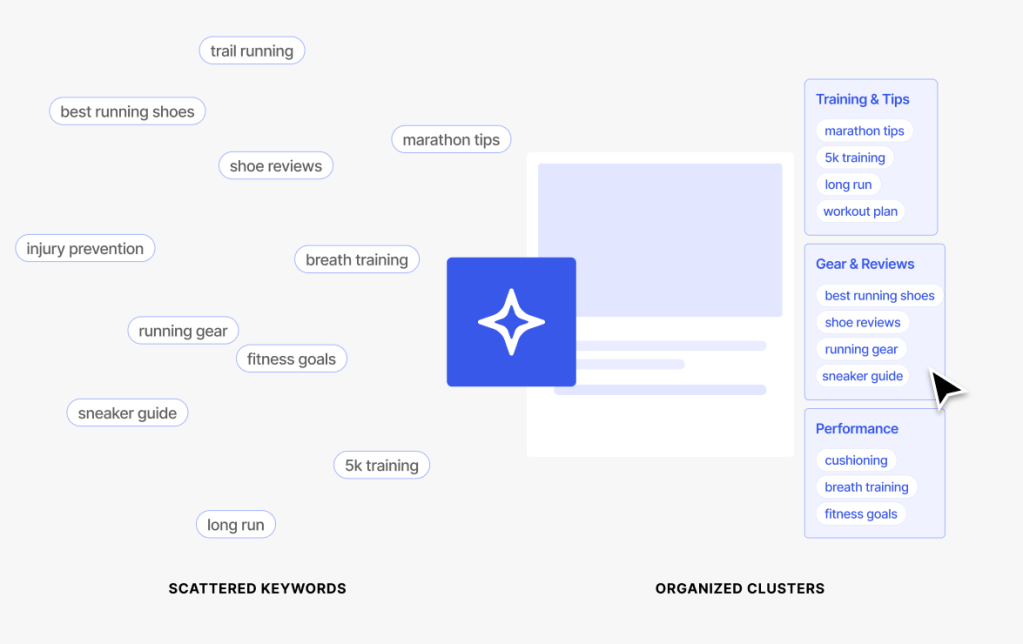
- Group related keywords into topic clusters
- Optimize headings and subheadings for clarity and relevance
- Draft clear meta descriptions that encourage clicks
- Identify questions your audience is actively searching for
- Use built-in SEO tools on your publishing platform. WordPress.com, for example, includes SEO features on every plan that work alongside your AI-assisted optimization.
That said, avoid publishing AI-generated content without editing. Search engines prioritize helpful, original content, and audiences are quickly becoming savvy at identifying “AI slop,” content that has little effort or quality behind it. Use AI to inform your optimization decisions, then layer in your personal experience to keep your content valuable and unique.
Improving affiliate conversions with AI and smarter copy
Affiliate conversions often come down to how clearly you explain the value of a product or service and how confidently you guide readers toward the next step. AI content tools can help refine the language you use in your posts so your recommendations are easier to understand and more compelling.
For example, AI can help you turn a basic product mention into a clearer explanation of why the product matters to your audience and make their purchase decision easier. Instead of simply listing features, you can use AI to help highlight benefits, identify use cases, or suggest ways to frame a recommendation that aligns with the reader’s needs. This is especially useful when writing hosting reviews. Our guide to writing hosting reviews that convert covers the structural foundations AI can help you build on.
Affiliates often use AI to create smarter copy that strengthens their content to directly influence conversions, such as:
- Enhancing product summaries and descriptions to highlight benefits
- Comparison sections with pros/cons and feature breakdowns that help readers make decisions faster
- Generating calls to action that encourage readers to click without sounding pushy
Another useful way to use AI tools for affiliate marketing is in testing variations of your messaging. AI can generate multiple versions of a call to action or headline so you can see which one resonates most with your audience.
As with any stage of the process, let AI do the drafting while you do the deciding. Your final version should always reflect your own voice and experience, which is what ultimately builds trust and drives affiliate clicks.
Using AI to scale without losing trust
One of the biggest advantages of AI tools for affiliate marketing is speed. Affiliates can research topics, outline posts, and draft content much faster than ever before. This makes it easier to scale content production and publish consistently, but speed should never come at the expense of credibility. Readers trust content creators who provide thoughtful recommendations and clear explanations. Generic content that feels automated or inaccurate will cost you that trust.
If you want to scale with AI while maintaining audience trust, keep a few best practices in mind:
- Always edit and refine any AI-generated content. Treat the output as a starting point, not a finished draft.
- Add your own personal insights or experiences. Even a short note about how a product fits into real life can make your content more credible.
- Verify product details and claims. AI can occasionally “hallucinate” and produce outdated or completely incorrect information. It can also make things up or misunderstand your original prompt.
- Maintain a consistent voice. Readers should feel like they are hearing from you, not from a machine.

When used with intention and thought, AI tools can help you produce more content while still maintaining the authenticity that keeps readers coming back.
Popular AI tools affiliates are using
There is no single “best” AI tool for affiliate marketers. Most affiliates use a mix of writing, research, and SEO tools depending on their workflow. The goal is to find tools that help you work more efficiently without overcomplicating your current content creation process.
Here are some of the most commonly used AI tools for affiliate marketing today.
Writing, research, and content creation
- ChatGPT: One of the most widely used AI content tools for brainstorming blog topics, outlining articles, drafting sections, and refining marketing copy.
- Claude: Known for producing thoughtful, well-structured writing and longer-form responses. Many affiliates use Claude to outline detailed guides or summarize research.
- Jasper: An AI writing assistant designed for marketing teams, especially useful for blog posts, emails, and campaign copy.
- Copy.ai: Helpful for short-form marketing content such as product descriptions, social captions, and ad copy.
SEO and content optimization
- Surfer SEO: Analyzes keyword usage and suggests improvements to help content rank in search results.
- Clearscope: Provides recommendations for improving content relevance and depth based on search data.
- Frase: Helps affiliates build SEO-friendly content briefs and identify common search questions. Use their free GEO score checker to review existing content.
Content planning and organization
- Notion AI: Useful for organizing research, outlining articles, and managing editorial calendars.
- AI integrations in project tools: Many planning platforms now include AI features that help generate ideas or summarize notes.
You don’t need every tool on this list. Most AI tools on the market have some free features or a free trial so you can try them out to see if they work for your process first. Most affiliates start with one writing assistant and then add SEO or planning tools as their workflow evolves.
What are the common pitfalls of using AI for affiliate marketing?
AI tools for affiliate marketing are powerful, but they aren’t foolproof. When used incorrectly, they can hurt your content performance and turn off your audience.
One of the most common mistakes is publishing AI-generated content without enough editing. Raw AI output can sometimes sound generic or repetitive. This reduces the perceived value of your recommendations and makes your audience question your authority on the topic.
Other common pitfalls include:
- Creating too much low-quality content. More content does not always mean more conversions if it lacks depth or usefulness.
- Ignoring originality. Search engines reward unique perspectives and helpful insights, not generic summaries.
- Relying on AI instead of real data. Your own analytics and affiliate performance metrics should guide your strategy.
- Skipping fact-checking. AI occasionally produces incorrect or outdated information.
The solution: Treat AI as a tool for efficiency, not as a replacement for your own human insight. Balance automation with personal input. Your audience trusts you for a reason, and you want to maintain that trust.
For more on mistakes that can slow your progress, check out our guide to common affiliate marketing mistakes and how to avoid them.
Getting started: Practical next steps
If you’re new to AI tools for affiliate marketing, the easiest way to begin is by experimenting with small tasks. You don’t need to redesign your entire workflow overnight.
Start by identifying one area where you spend a lot of time. Then test how AI might help simplify that step.
Some simple ways affiliates get started include:
- Asking AI to generate blog topic ideas based on a niche
- Creating outlines for product reviews or comparison articles
- Drafting meta descriptions or social media captions
- Expanding existing content with additional FAQs or explanations
For a broader look at foundational affiliate strategies, our article on essential tips for hosting affiliate success is a great companion to this post.
As you experiment, pay attention to how the changes you make affect your workflow and results. If AI helps you publish content faster while maintaining quality, you can gradually integrate it into more parts of your process. These small improvements can add up to meaningful gains in traffic and improve affiliate conversions while saving you time.
If you’re an Automattic affiliate promoting WordPress.com, these same AI techniques can help you create more compelling content about the platform’s features and plans.
Conclusion: Use AI as a competitive advantage
AI tools for affiliate marketing are quickly becoming part of the modern content workflow. Affiliates and content creators who learn how to use AI tools strategically can research topics faster, produce more optimized content, and uncover new opportunities to improve conversions.
The real advantage comes from combining the efficiency AI tools offer with your own skills and insight. Your experience, voice, and understanding of your audience are still what make your recommendations valuable.
When used thoughtfully, AI becomes a powerful support system. It helps you focus less on repetitive tasks and more on creating helpful content that builds trust and drives affiliate sales.
Frequently asked questions about using AI for affiliate marketing
Can AI tools help improve affiliate marketing conversions?
Yes. AI tools can help affiliate marketers improve conversions by refining copy, identifying search intent, and generating ideas for more helpful content. For example, tools like ChatGPT or Claude can suggest clearer product explanations, stronger calls to action, or better ways to structure comparisons. When combined with human editing and real product insight, AI-assisted content can be more persuasive and easier for readers to act on.
How do affiliates use ChatGPT or other AI tools in their workflow?
Affiliates commonly use AI tools like ChatGPT and Claude to support several stages of content creation. These tools can help create blog topics, draft outlines, summarize research, suggest SEO improvements, and refine marketing copy. AI works best as a productivity tool that speeds up research and drafting, while the affiliate adds their own expertise, editing, and personal perspective.
Is it safe to use AI-generated content for affiliate marketing?
Yes, but AI-generated content should always be reviewed and edited before publishing. AI can sometimes produce generic phrasing or outdated information, so affiliates should verify product details and add original insights. Maintaining a clear voice, accurate recommendations, and proper affiliate disclosures helps ensure that AI-assisted content remains trustworthy and effective.
What are the best AI tools for affiliate marketers?
Many affiliates use a combination of AI tools depending on their needs. ChatGPT and Claude are popular for writing, research, and brainstorming ideas. SEO tools like Surfer SEO, Clearscope, and Frase help optimize content for search engines. Planning tools such as Notion AI can also help organize ideas and editorial calendars. The best tools are the ones that simplify your workflow and help you create better content consistently.
How should beginners start using AI for affiliate marketing?
The easiest way to start is by using AI for one small task at a time. Many affiliates begin by generating blog topic ideas, outlining posts, or drafting meta descriptions. As you become more comfortable with the tools, you can gradually use AI to support research, SEO optimization, and content planning. Starting small helps you learn where AI saves time while still keeping your content authentic. For a broader introduction, see our affiliate marketing 101 beginner’s guide.
Can I use AI to write affiliate content for WordPress.com?
Yes. AI tools like ChatGPT and Claude can help affiliates create content for the WordPress.com Affiliate Program by supporting brainstorming, SEO optimization, outlines, and marketing copy. Many affiliates use AI alongside WordPress.com’s built-in blogging and publishing tools to create content more efficiently and improve affiliate marketing workflows.
However, AI-generated content should always be reviewed, edited, and enhanced with original insights or experience. The strongest affiliate content combines AI efficiency with human expertise to create accurate, helpful, and trustworthy recommendations that connect with readers.

